ZELO Statement on World Wildlife Day 2026
3 March 2026
Throughout history, wildlife has been integral to human well-being. As essential components of biodiversity, both animals and plants play an indispensable role in sustaining ecological balance.
The Zimbabwe Environmental Law Organisation (ZELO) has consistently championed the preservation of wildlife, cognizant of the fact that challenges such as human-wildlife conflict continue to drive numerous animal species towards extinction.
Today, however, we turn our attention to another critical aspect of wildlife: flora and fauna. Though facing risks similar to those of animal species, plants rarely receive the same level of public attention.
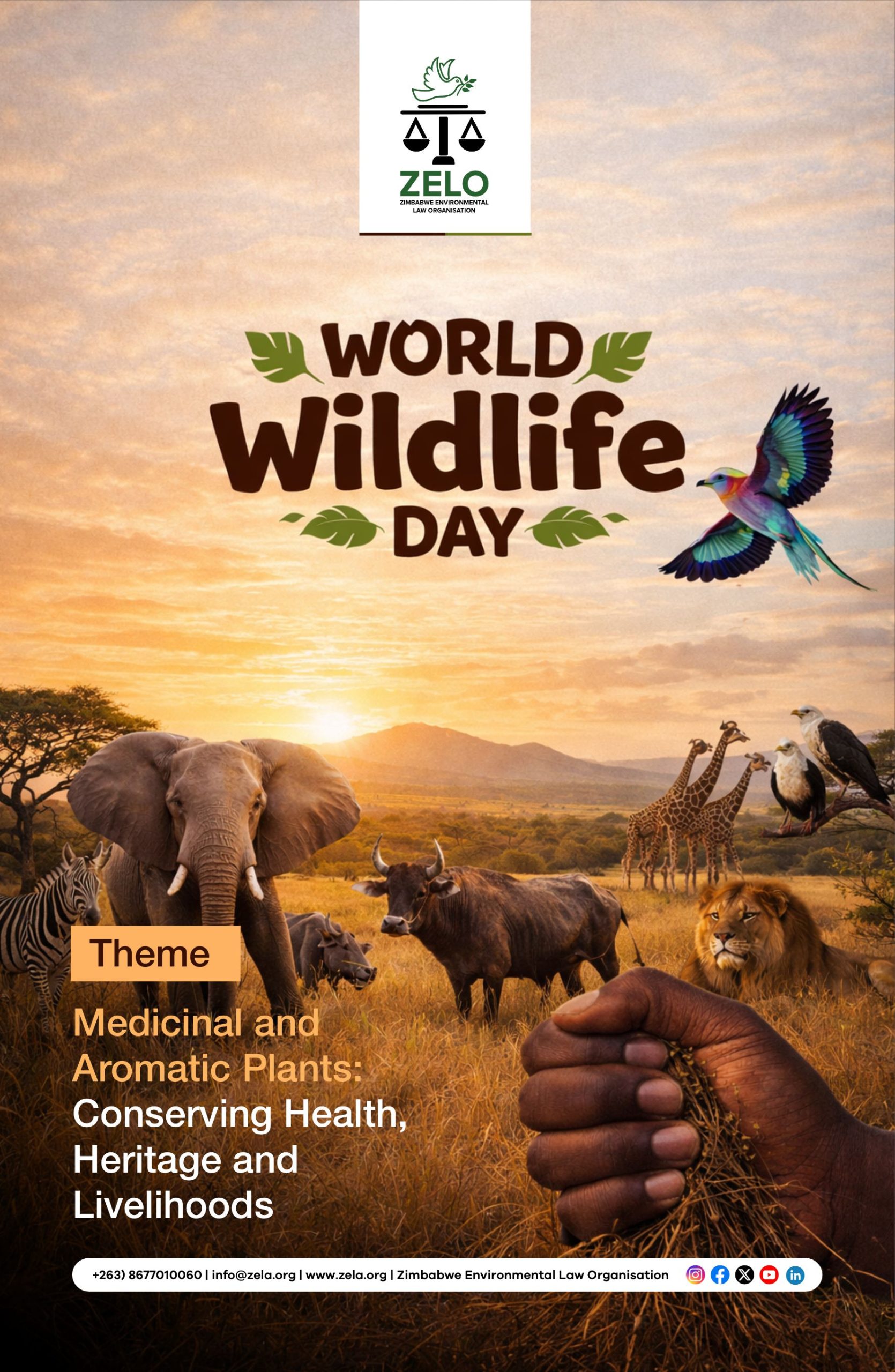
This year, World Wildlife Day 2026 is commemorated under the theme: Medicinal and Aromatic Plants: Conserving Health, Heritage and Livelihoods. ZELO celebrates this occasion by acknowledging the unique and often underappreciated contributions of plants to both people and the planet.
According to the United Nations, “This living heritage is under threat. The climate crisis, habitat destruction, overharvesting and illegal trade are accelerating the decline of thousands of plants, putting incomes and ecologies at risk.” This warning underscores the timeliness of this year’s theme. Targeted efforts to protect flora are inseparable from the broader goal of preserving both human communities and the natural world.
In our work ZELO views plants as irreplaceable components of the environment, serving as primary sources of food and medicinal compounds used to treat diseases. This is especially true for medicinal and aromatic plants, which are used across diverse cultures to maintain physical, mental, and spiritual health.
This year’s theme also aligns with national priorities. Through the National Development Strategy 2, the Government of Zimbabwe has demonstrated commitment to unlocking the economic potential of non-timber forest products and biological resources. Key initiatives include formalizing and growing bioprospecting and bio-trade, promoting sustainable harvesting, supporting value addition, and developing markets for medicinal plants, efforts that aim to integrate these resources into domestic and international trade.
Such measures position biodiversity as a driver of inclusive growth, ecological sustainability, and industrial development. These objectives can be further advanced through the following actions:
Call to Action
- Promote awareness of the importance of plants and actively involve local communities in conservation efforts.
- Develop guidelines for the sustainable harvesting of medicinal and wild food plants.
- Strengthen laws and policies that protect endangered plant species and their habitats.
- Support research into the medicinal properties and ecological roles of native plants and document traditional knowledge.
- Encourage collaboration between traditional healers and modern healthcare practitioners to ensure the safe and effective use of plant-based remedies.
- Implement reforestation and habitat restoration programs to safeguard biodiversity.
- Support local processing and marketing of plant products to enhance incomes and create incentives for conservation.