By Kudakwashe Dube
The growing global challenge known as the triple planetary crisis – climate change, biodiversity loss, and pollution – continues to affect communities around the world. In Zimbabwe, mining activities in areas such as Bikita and across Masvingo Province have increasingly contributed to environmental degradation and raised significant human rights concerns, including displacement, loss of livelihoods, and limited community participation in environmental decision-making processes.
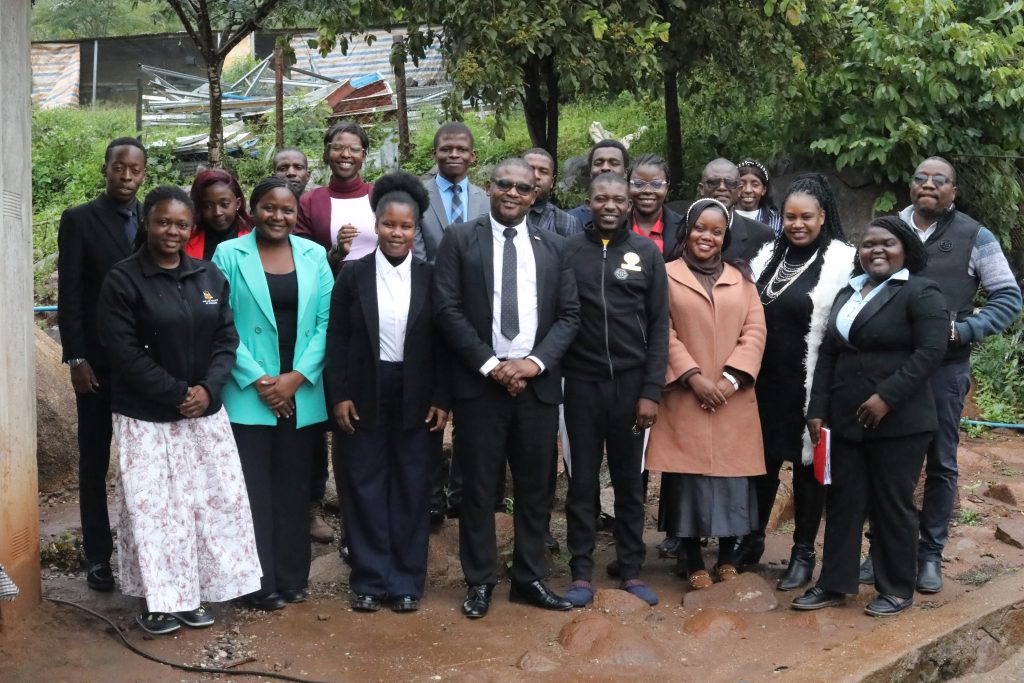
In response to these challenges, the Zimbabwe Environmental Law Organisation (ZELO), in partnership with the Great Zimbabwe University (GZU) Herbert Chitepo Law School, recently conducted an environmental law clinic in Bikita. The engagement brought law students and lecturers closer to the community affected by lithium mining activities, providing a platform for dialogue, learning, and legal support.
Supported by the Norwegian Church Aid (NCA) HUMAK project, the main objective of the activity was to partner with the institution to provide legal assistance, conduct research, and advocate for environmental and human rights protection in mining-affected communities.

As part of the visit, students had the opportunity to engage with Chief Marozva and members of the community at his residence in Bikita. The traditional leader shared insights into the environmental and social challenges affecting the community due to lithium mining activities in the area.
Chief Marozva highlighted several concerns, including environmental degradation, noise pollution, displacement of communities, and the erosion of social and cultural practices. At the same time, he acknowledged some positive contributions made by mining companies operating in the area such as drilling boreholes, providing food support to schools, and constructing public sanitation facilities.
Importantly, the Chief emphasized the value of integrating traditional knowledge and cultural practices into modern legal frameworks in order to strengthen environmental protection. “The laws of this land which we have had for years have helped us protect and preserve the environment, and we feel better using them. However, due to changing contexts we would appreciate if you could take on board ways through which we have been dealing with environmental issues culturally so we can strengthen the legal framework,” he said.
Chief Marozva commended the initiative by ZELO and GZU, noting that such engagements provide communities with an important platform to share their experiences and concerns. He encouraged the students and legal practitioners to document the issues raised and share the information with communities so they can remain informed and involved in ongoing advocacy efforts.
Accompanying the students from GZU was the Executive Dean of the Herbert Chitepo Law School, Mr. NkosanaMaphosa who emphasized the importance of a multi-stakeholder approach in promoting sustainable development. He highlighted the value of incorporating community voices into legal education so that students can appreciate practical experiences shared by communities directly affected by environmental challenges.
“Our education should not relocate one’s mind from issues affecting Zimbabwe to issues beyond our borders. It must be grounded in the contextual realities and challenges happening in the country. Students must understand these challenges so that they are not divorced from such issues,” said Dean Maphosa.
Through initiatives such as the environmental law clinics, ZELO and GZU continue to strengthen the link between legal education, community engagement, and environmental justice, helping to nurture a generation of legal practitioners committed to protecting both people and the environment.