By Shingai C Mujeri
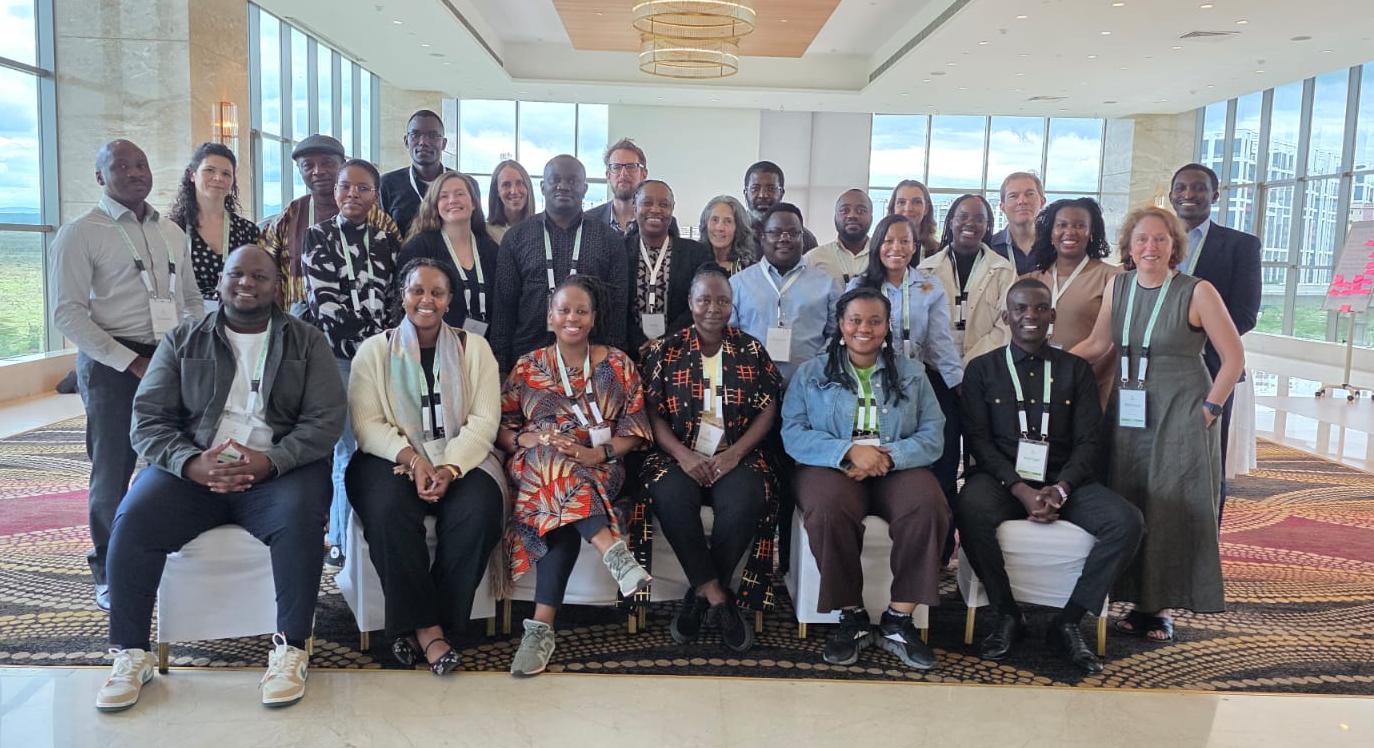
Earlier this month, I spent a week attending the Africa Clean Power Convening in Nairobi, Kenya, joining fellow legal practitioners, policymakers, investors, and civil society leaders from across the continent.
From 1 to 4 June, we engaged in enlightening dialogue on the legal foundations of the continent’s clean energy transition and I left with a sharper and more urgent picture of what stands between Africa and a transition that is fast, fair, and African-owned.
The case for prioritising Africa’s power sector is clear: The continent holds 60% of the world’s most reliable solar resources, and solar photovoltaic (PV) technology is now the cheapest source of new electricity generation in most African markets, yet 46% of Africans still have no access to electricity. Additionally, although electricity generation is Africa’s single largest source of emissions, it is seemingly the easiest to decarbonize as the technology is mature, costs keep falling, and the resource is abundant.
Thus, getting the power sector right means the continent closes its access gap and cuts emissions in the same stroke. This is why governments are restructuring their utilities, opening markets to independent power producers, building independent regulators, reforming transmission planning and grid access, and rolling out tariff reform, net metering, and mini-grid frameworks. Interestingly, the week’s discussions revealed that the opportunity and the reform momentum are running well ahead of the legal foundations needed to support them.
The only consistent strand in Nairobi were the gaps amongst African countries, different systems from one country to the next. Renewable energy ownership on the continent sits below 2%, a figure that should be read less as an investment statistic and more as a sovereignty problem which brought me to the uncomfortable conclusion that Africa is hosting a transition it does not own. This regulatory and operational uncertainty pushes the cost of capital for African renewable projects up two to three times those of developed-market rates, and because most power sector laws were never designed with a transition in mind, many countries remain exposed to the risk of locking in coal capacity their own economics no longer justify.
It emerged that regional power pools are becoming increasingly central to energy projects’ ability to attract investment and move across borders. One caveat I noted was the exclusion of civil society which has no formal channel to influence how these pools are planned or governed. Another was the general absence of standardised power purchase agreement frameworks tied to national targets. I also noted that in most countries, access to information and public participation in energy planning remain limited, accountability for climate and energy commitments is weak, and many of the utilities meant to anchor this transition are themselves carrying significant debt – undermining their creditworthiness and, with it, the bankability of the very projects the continent needs.
Transmission infrastructure compounds the problem as the continent battles underdeveloped and poorly integrated systems across borders. This limits the amount of generated renewable energy the grid can absorb. Thus, while everyone agreed the transition makes strategic and political sense, the economic case – the cost-benefit analysis that would make that argument irresistible to finance ministries and investors – was largely missing from the conversations. Another uncomfortable conclusion emerged: A transition that cannot prove its economics in hard numbers struggles to outcompete the status quo.
None of this is unique to one country, and none of it can be solved by one country acting alone. These are structural, continent-wide gaps, and they sit squarely within the legal and policy space that the Zimbabwe Environmental Law Organisation (ZELO) operates in.
Zimbabwe is no exception, mirroring these patterns closely and operating in mid-reform. The National Energy Policy is being realigned to support climate and transition objectives, a National Integrated Resource Plan is under development, mini-grid and e-mobility frameworks are taking shape, and the national utility is also being restructured. However, Zimbabwe’s policy framework remains outdated and fragmented, still lacks a dedicated Energy Transition Plan and needs alignment with the National Energy Compact. Information access and public participation in energy planning remain limited in practice, the utility’s financial position weighs on bankability, and coal generation and transmission constraints persist. In addition, despite electricity access standing at 62% nationally, that figure conceals a sharp divide – 83% in urban areas against just 27% in rural areas. Thus, the mid reform assessment.
ZELO is already working across these exact fault lines under its Climate Change and Energy as well as Land and Natural Resources thematic areas. The organisation promotes engagement on the National Energy Policy and Integrated Resource Plan processes, supporting mini-grid and e-mobility framework development, and the increased uptake of renewable energy. ZELO is a leading advocate for stronger accountability and broader public participation to ensure that Zimbabwe does not lag behind, and communities are not left out in a transition that can only be just if it is inclusive.
With Africa owning less than 2% of the renewable infrastructure built on the continent, ownership is a central question in the transition conversation. One that ZELO advances through promoting the inclusion of domestic ownership, local content, and community benefit-sharing arrangements in Zimbabwe’s energy and investment laws.
From these lessons, I am convinced that if Africa is to achieve a just transition, the priorities are clear:
- Ownership and benefit-sharing frameworks must give communities and African investors a genuine stake in local projects.
- The economics of the transition need to be brought into public view through rigorous cost-benefit analysis to ensure the case for change rests on both numbers and principle.
- Accountability mechanisms must be robust and enforceable for missed commitments to carry consequences.
- Civil society needs a seat at the table in regional power pool governance to protect the public interest and to accelerate renewable uptake.
- Countries need dedicated, legally anchored energy transition plans, rather than policy statements that carry no enforceable weight.
For Zimbabwe, ZELO is already advancing each of these priorities and the lessons I carried back from Nairobi only sharpen the urgency of that work!