By Hillary Mugota
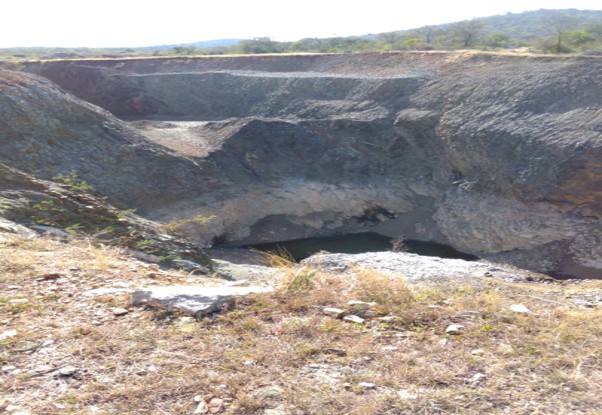
Earlier this year, the Zimbabwe Environmental Law Organisation (ZELO) launched a new project in Gwanda District and learnt of a heartbreaking incident in Ntalale where a local pupil had recently drowned after falling into an open pit left by prospecting miners, a hole that had filled with rainwater. The tragedy underscored the urgent dangers that irresponsible extractive practices pose to children in the area.
It became apparent that the Terre des Hommes supported project “promoting the right to a healthy environment for children and young people affected by environmental degradation caused by the extractive industries” was coming to a district where children were facing numerous environmental challenges from irresponsible extractive practices.
Thus, the decision to launch the ZELO 2026 commemorations for the United Nations General Comment No. 26 in Gwanda.
General Comment No. 26 of the United Nations Committee on Children’s Rights and the Environment with a Special focus on Climate Change[1] provides a vital framework responding to the need for protecting every child’s right to a clean, healthy and sustainable environment, and highlights what governments, corporate and all relevant players must do to prevent both immediate, foreseeable and future harm.
The central message is that the climate crisis is not only an environmental emergency but a children’s rights crisis. Drought, floods, pollution, biodiversity loss and unsafe mining practices can undermine children’s health, education, safety and development.
Adopted in 2023, General Comment No. 26 explains how the Convention on the Rights of the Child applies to environmental degradation and climate change.[2] It moves environmental protection from a policy preference to a child-rights obligation where states must regulate public and private actors, prevent environmental damage, provide access to information and effective remedies, assess the impact of decisions on children, and ensure that children’s views influence environmental decision-making. [3]The framework also requires special attention to children who face disproportionate risks because of poverty, disability, displacement, remoteness or dependence on degraded natural resources.
This framework connects the right to a healthy environment with the rights to life, survival and development; health; education; play; an adequate standard of living; non-discrimination; freedom from violence; access to information; and participation. In mineral host communities, decisions about licensing, environmental impact assessments, waste, water quality, rehabilitation and corporate social responsibility must also be tested against their effects on children.[4] Implementation of GC26 requires that children’s environmental rights should be integrated across climate, mining, energy, water, agriculture, health, education, disaster-risk management and social protection policies. This means aligning legislation and budgets and assigning clear responsibilities to ministries, regulators, oversight institutions and embedding child-rights safeguards in law and policy.
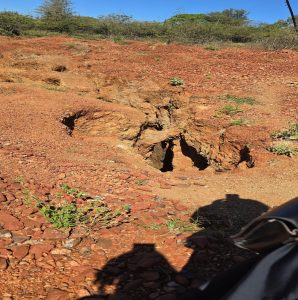
Figure 2: Open pits in Ward 5, Gwanda
National commitments only matter if they change everyday decisions in districts, wards and affected villages. Experience from Gwanda lithium mining community shows the value of bringing together all relevant stakeholders inclusive of children and young people in the discussion. Such coordination creates a shared understanding of environmental child rights and clarifies who must prevent, report and respond to harm. Local implementation should integrate children’s rights into district plans, bylaw formulation, environmental decisions and community-benefit arrangement. It should make environmental impact assessments accessible and responsive to children’s views; address mining related risks, prevent the involvement of children in mining activities and ensure sustained awareness through community and media platforms in accessible all languages.
For communities in Gwanda which are battling environmental degradation and climate change, these principles are not abstract. Upon learning that ZELO’s project also aimed to discourage children from leaving school to work in mining pits, the headmistress of Ntalale Secondary School confirmed that this was a painful reality. Many learners had already been drawn into artisanal mining, sacrificing their education and safety for short-term income.
It is, therefore, worth noting that General Comment No. 26 does three crucial things in the climate crisis. It defines environmental harm and climate change as children’s rights issues, it makes states legally and morally responsible for protecting children from environmental risks, and it embeds intergenerational justice in law and policy.
As such, General Comment 26 puts future generations first and gives children a seat at the table. That’s worth celebrating!
[1] CRC/C/GC/26: General comment No. 26 (2023) on children’s rights and the environment with a special focus on climate change | OHCHR
[2] General Comment No.26 | General Comment No. 26 on Children’s Rights and the Environment
[3] See https://childrightsenvironment.org/reports/.
[4] Committee on the Rights of the Child, general comment No. 15 (2013) on the right of the child to the enjoyment of the highest attainable standard of health, para. 48.