By Natalia Marovatsanga
At the start of this year, I promised myself that I would broaden my horizons, put myself out there and embrace opportunities, even when they fell completely outside my comfort zone. So, when Midlands State University invited applications for its environmental law unit, I applied.
After I was accepted, the university announced a two-day environmental law workshop in collaboration with the Zimbabwe Environmental Law Organisation. Beyond environmental classes in primary school, I knew practically nothing about ah law. I arrived with modest expectations, confident that if the legal jargon went completely over my head, I would at least have fun and make new connections. What unfolded over those forty-eight hours exceeded every expectation.
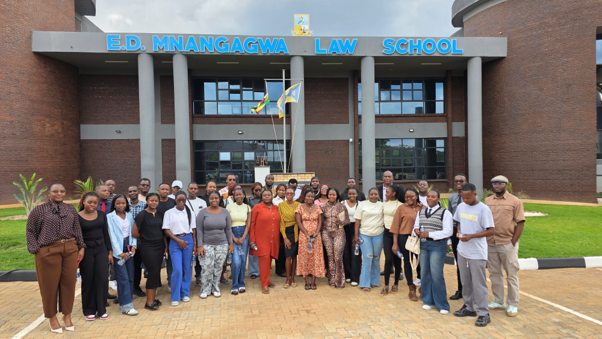
The workshop, held on 5 and 6 October 2026, started with an eye-opening session led by Dr Mugadza, Dean of the Midlands State University Law Faculty. She grounded us in international law and international environmental justice before we moved on to research methodology, examining how practical questions and curious observations can become meaningful research and legal scholarship. The day’s most enduring lesson was not only about statutes, but also about how we approach communities – It was about posture. When conducting legal research, you do not arrive as an outside authority or seek to stand out. True legal advocacy begins with humility: listening, engaging respectfully and becoming part of the community you aim to serve.
The second day broadened our perspective as we explored what environmental justice truly demands. I had assumed it was simply about fairness among people. Instead, I learned that it also involves recognising the rights of nature. Biodiversity and ecosystems have intrinsic value and must be considered in legal and policy decisions. Environmental justice concerns the fair distribution of environmental burdens and acknowledges that human well-being and ecological health are inseparable. The real test came during practical breakout exercises based on real-world scenarios. In one exercise, we stepped into the role of a commissioner assessing environmental decisions before engaging with a community. I was paired with a peer who had extensive debating experience. He was brilliant, and standing beside someone so articulate naturally increased the pressure. Yet, to my surprise, the words flowed. I held my ground, presented our points clearly and received genuine compliments on my delivery. That confidence did not come from years of study; it came from the facilitators. They broke down dense, intimidating jurisprudence into concepts that felt intuitive, relatable and easy to grasp. They met us exactly where we were.
Between the insightful career guidance, conversations with peers and networking over great food, I left the workshop with a notebook full of questions and a newfound interest in environmental law. Taking a leap into unfamiliar territory turned out to be one of the best choices I have made this year. The experience showed me that when excellent teaching meets a willingness to learn, you do not need an established background in a subject to find your voice in it.
*Natalia Marovatsanga is a Law student at the Midlands State University